Publications
 Partners


Pretoria - A budget deficit of 4.6% of gross domestic product (GDP) is projected in 2012/13, Finance Minister Pravin Gordhan said on Wednesday, claiming SA’s finances are in good health.
“We plan to reduce the deficit to 3% of GDP in 2014/15 and public debt will stabilise at about 38% of GDP,” Gordhan said.
This was in not in line with what economists had expected. Economists have been worried that the country’s budget deficit has been growing in the past few years.
They said it was not in danger of leading to any sort of default, but was widening rapidly.
Over the past three years, public debt has risen to support infrastructure investment and to fund economic and social priorities.
Over the medium term, the fiscal stance would, according to Gordhan, stabilise the growth of debt and maintain long-term sustainability. This would ensure that debt and debt service costs do not “crowd out” productive expenditure.
In 2012/13, government’s net borrowing requirement is expected to reach R168.8bn, up from R152.7bn in 2011/12, while state-owned entities will borrow an estimated R76.9bn to fund their capital expenditure programmes.
Development finance institutions will borrow a projected R13.9bn to meet developmental funding commitments.
The SA economy has demonstrated resilience, while global developments are likely to hold back higher growth over the short term.
Gordhan said the economy grew by an estimated 3.1% in 2011 and GDP growth was expected to slow to 2.7% in 2012, before accelerating to 3.6% in 2013 and 4.2% in 2014.
This would be on the back of the world’s economic recovery and stronger domestic consumption and investment, supporting job-creation.
Growth in private fixed capital formation is projected to surge from 4% in 2012 to 6.8% by 2014, underpinned by
improving business confidence.
Public investment growth would average 4.3% per year over the next three years. While export growth accelerated over the medium term, imports are projected to grow more quickly in response to robust domestic demand.
According to Gordhan, this will contribute to the current account deficit widening from an estimated 3.3% of GDP in 2011 to 4.4% of GDP in 2014.
“This level of deficit should be comfortably financed through a combination of foreign direct investment (FDI), international investment in the bond and equity markets, long-term foreign loans to public entities and trade finance,” he said.
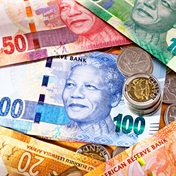
The trade weighted rand exchange rate depreciated by 13.2% between July and December 2011.
Rand volatile
In the year ahead, the currency would remain subject to swings in global risk appetite as investors choose
between low-yield safe haven assets such as US government bonds and higher-yield investments in emerging markets.
Headline consumer price index inflation is projected to increase from an average of 5% in 2011 to 6.2% in 2012 as a result of high food prices, rising administered prices and higher prices of imported goods due to the weaker rand.
After temporarily rising above the upper limit of the 3-6% target band, inflation is forecast to fall to 5.3% in 2013 and 5.1% in 2014.
International economic conditions remain unsettled. While there are signs of a revival in the US economy, much of Europe is expected to fall into recession during 2012.
Emerging markets continue to perform strongly, but growth in China and India is projected to moderate in the year ahead. A high degree of risk clouds the global outlook.
“We plan to reduce the deficit to 3% of GDP in 2014/15 and public debt will stabilise at about 38% of GDP,” Gordhan said.
This was in not in line with what economists had expected. Economists have been worried that the country’s budget deficit has been growing in the past few years.
They said it was not in danger of leading to any sort of default, but was widening rapidly.
Over the past three years, public debt has risen to support infrastructure investment and to fund economic and social priorities.
Over the medium term, the fiscal stance would, according to Gordhan, stabilise the growth of debt and maintain long-term sustainability. This would ensure that debt and debt service costs do not “crowd out” productive expenditure.
In 2012/13, government’s net borrowing requirement is expected to reach R168.8bn, up from R152.7bn in 2011/12, while state-owned entities will borrow an estimated R76.9bn to fund their capital expenditure programmes.
Development finance institutions will borrow a projected R13.9bn to meet developmental funding commitments.
The SA economy has demonstrated resilience, while global developments are likely to hold back higher growth over the short term.
Gordhan said the economy grew by an estimated 3.1% in 2011 and GDP growth was expected to slow to 2.7% in 2012, before accelerating to 3.6% in 2013 and 4.2% in 2014.
This would be on the back of the world’s economic recovery and stronger domestic consumption and investment, supporting job-creation.
Growth in private fixed capital formation is projected to surge from 4% in 2012 to 6.8% by 2014, underpinned by
improving business confidence.
Public investment growth would average 4.3% per year over the next three years. While export growth accelerated over the medium term, imports are projected to grow more quickly in response to robust domestic demand.
According to Gordhan, this will contribute to the current account deficit widening from an estimated 3.3% of GDP in 2011 to 4.4% of GDP in 2014.
“This level of deficit should be comfortably financed through a combination of foreign direct investment (FDI), international investment in the bond and equity markets, long-term foreign loans to public entities and trade finance,” he said.
The trade weighted rand exchange rate depreciated by 13.2% between July and December 2011.
Rand volatile
In the year ahead, the currency would remain subject to swings in global risk appetite as investors choose
between low-yield safe haven assets such as US government bonds and higher-yield investments in emerging markets.
Headline consumer price index inflation is projected to increase from an average of 5% in 2011 to 6.2% in 2012 as a result of high food prices, rising administered prices and higher prices of imported goods due to the weaker rand.
After temporarily rising above the upper limit of the 3-6% target band, inflation is forecast to fall to 5.3% in 2013 and 5.1% in 2014.
International economic conditions remain unsettled. While there are signs of a revival in the US economy, much of Europe is expected to fall into recession during 2012.
Emerging markets continue to perform strongly, but growth in China and India is projected to moderate in the year ahead. A high degree of risk clouds the global outlook.